The résumé looked impressive right up until the next question: What did you actually do?
The candidate had the experience. The problem was the page. Strategic leadership appeared without a decision. A strong result appeared without context. A polished skills list offered no example of the work behind it.
Instead of making the candidate easier to see, the résumé placed a wall of professional language between the person and the reader. One ordinary follow-up question could expose every unsupported claim.
The Five-Second Résumé Credibility Test finds those weak points before an interview does. It is a practical review tool, not a prediction of recruiter behavior.
Be seen for work you can defend.
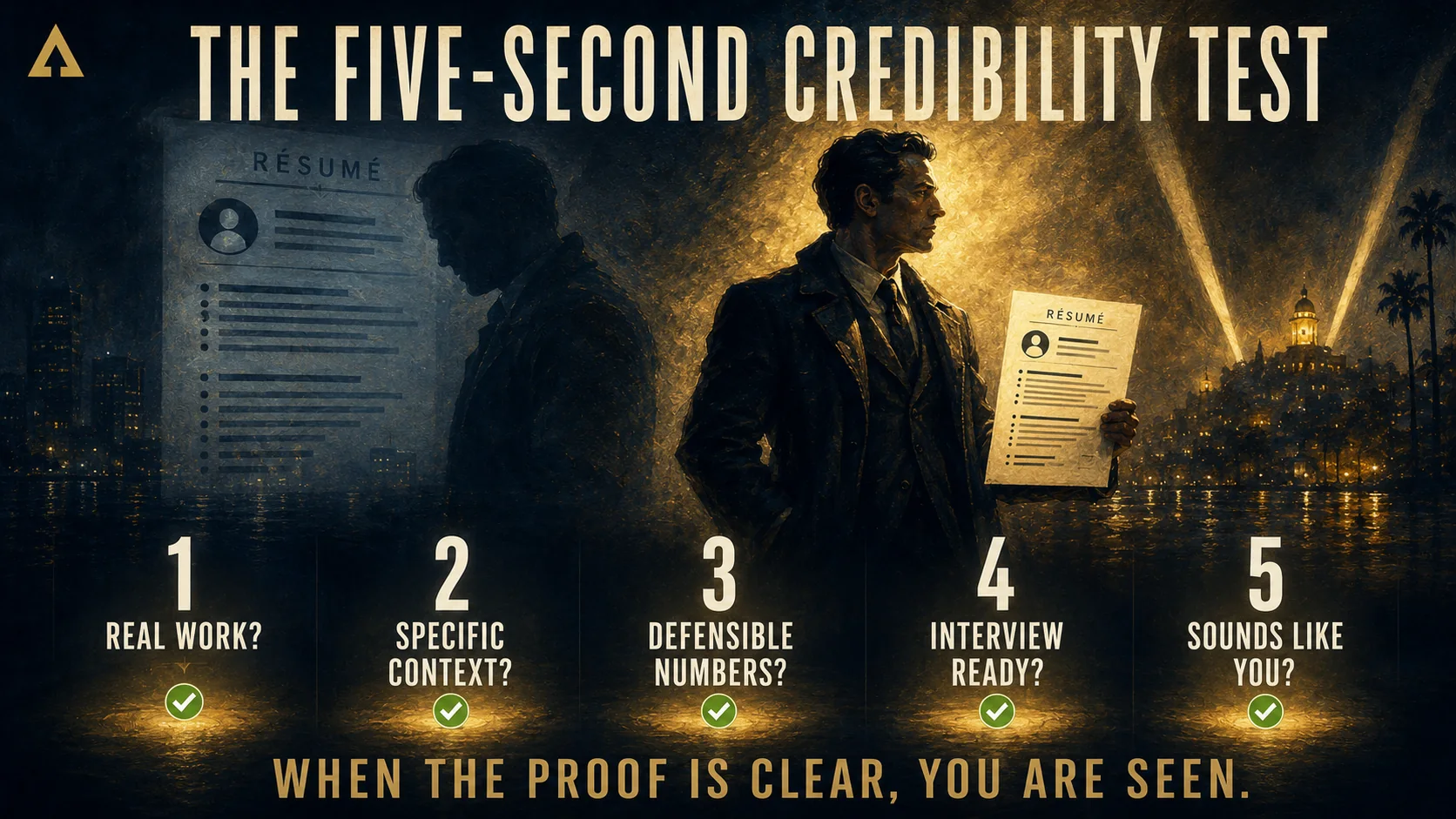
What is the five-second test?
Choose one bullet from the top third of the résumé and ask five questions.
- Does it name real work?
- Does it include a specific tool, process, constraint, or decision?
- Are the numbers and results defensible?
- Could you explain every part in an interview?
- Does it sound like one real person instead of generic AI?
The name is a reminder that credibility should be visible quickly. It is not a claim that every recruiter decides in exactly five seconds.
Test 1: Does it name real work?
Words such as strategic, innovative, results-driven, and collaborative are labels. A credible résumé names the choice, action, and change behind the label.
Strategic marketing leader who drove cross-functional growth initiatives.
Reset go-to-market priorities with sales and operations, clarified ownership by channel, and moved the launch plan into one weekly decision process.
Illustrative example. Use only actions and outcomes supported by your actual experience.
Labels are not proof.

Test 2: Is there specific context?
Specific nouns create trust. Name a tool, process, constraint, or decision that shows where the work happened and how you operated. One or two can turn a broad claim into recognizable work.
Build a credible bullet.

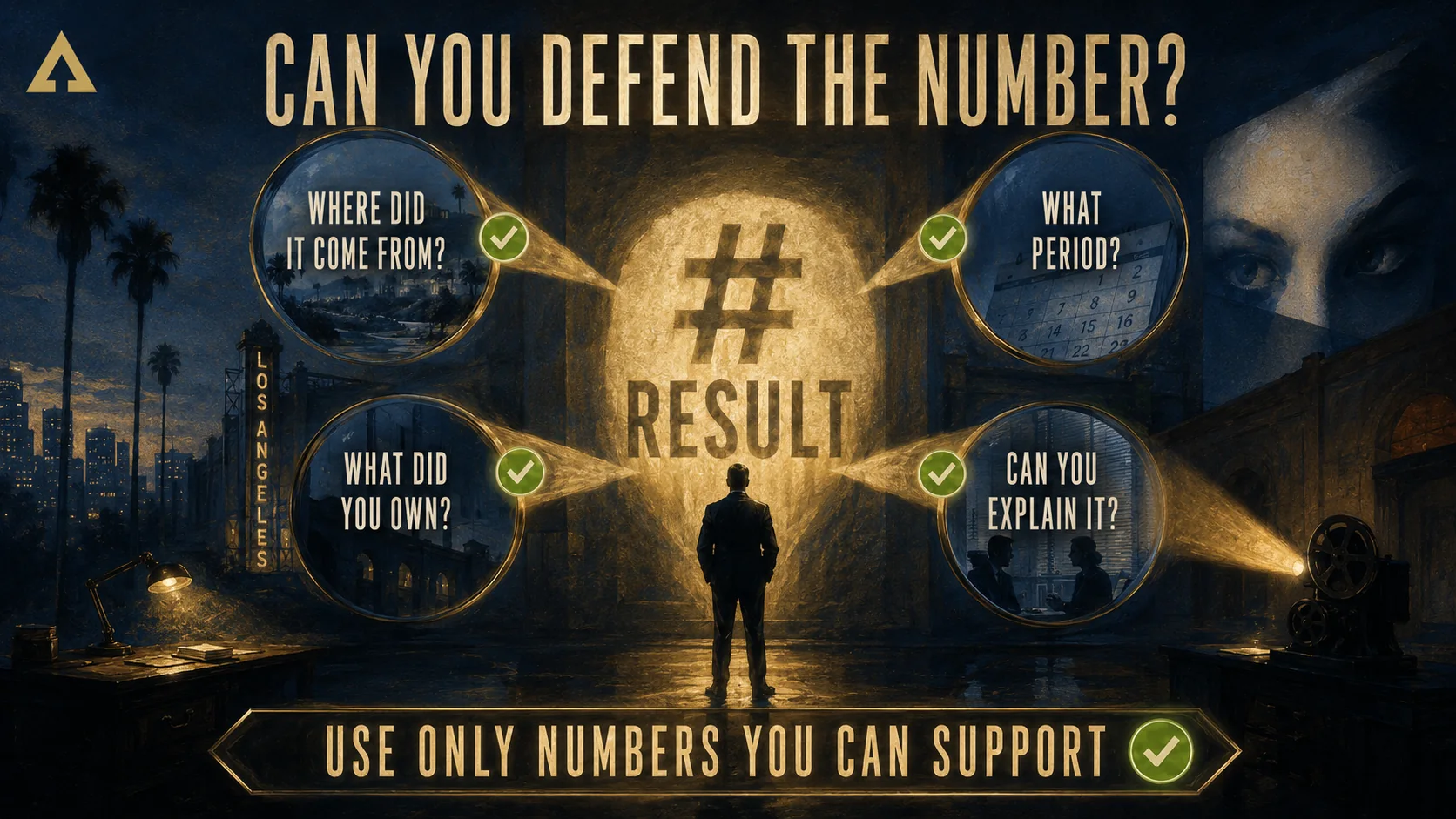
Test 3: Are the numbers defensible?
Before using a number, ask where it came from, what period it covers, what you influenced, and whether you can explain the calculation. A smaller number you can explain is stronger than a dramatic number you cannot defend.
If revenue is unavailable, describe honest scope such as team size, locations, projects, budget responsibility, volume, turnaround time, adoption, or risk.
Can you defend the number?
Test 4: Could you explain it in an interview?
The résumé is the opening claim. A credible bullet should lead naturally into a short story about the situation, action, result, and the part you owned.
If a follow-up question makes you nervous, stop. Find the source, correct the scope, remove the tool you did not use, or clarify whether you led, supported, advised, or participated.
Test 5: Does it sound like one real person?
Generic AI language can repeat the same rhythm across every bullet. It piles up adjectives and makes ordinary work sound like a corporate announcement. The candidate remains the final reviewer and the person accountable for every claim.
Read the bullet out loud. If you would never say it, simplify it. If it could belong to anyone in the profession, add the context that belongs to you.
Read it out loud.

How to score the test
This is a review shortcut, not a hiring score. Use it on the summary, recent experience, major achievements, and role-specific proof.
A 10-minute credibility review
- Read only the top third.
- Circle generic phrases.
- Underline concrete nouns.
- Verify every number, title, date, and tool.
- Say the strongest three bullets out loud.
How Kaxori uses the same standard
Kaxori helps candidates strengthen supported experience, not invent a more convenient career history. It can compare a résumé with a job and help surface gaps in language and evidence.
Kaxori cannot verify a private fact it has never been given. You still own the final review of titles, dates, tools, numbers, outcomes, and responsibility.
Make your strongest work easier to see.
Run the credibility test on the top third of your résumé. Then compare it with one real job in Kaxori.
Frequently asked questions
What makes a résumé credible?
Real work, specific context, accurate scope, defensible numbers, and language you can explain.
Is the five-second test based on recruiter timing research?
No. It is a practical editorial name, not a scientific claim about recruiter review time.
How can I tell if my résumé sounds AI-generated?
Look for repeated patterns, inflated adjectives, vague results, and language you would never use.
Should every résumé bullet include a number?
No. Use numbers only when they are relevant and verifiable.
What if I cannot verify an old result?
Narrow the claim, describe scope without the number, or remove the detail. Do not guess.
Can Kaxori guarantee that a recruiter will believe my résumé?
No. Kaxori can help surface gaps and strengthen supported language. It cannot guarantee any screening, interview, or hiring outcome.