Why an ATS score feels more certain than it is
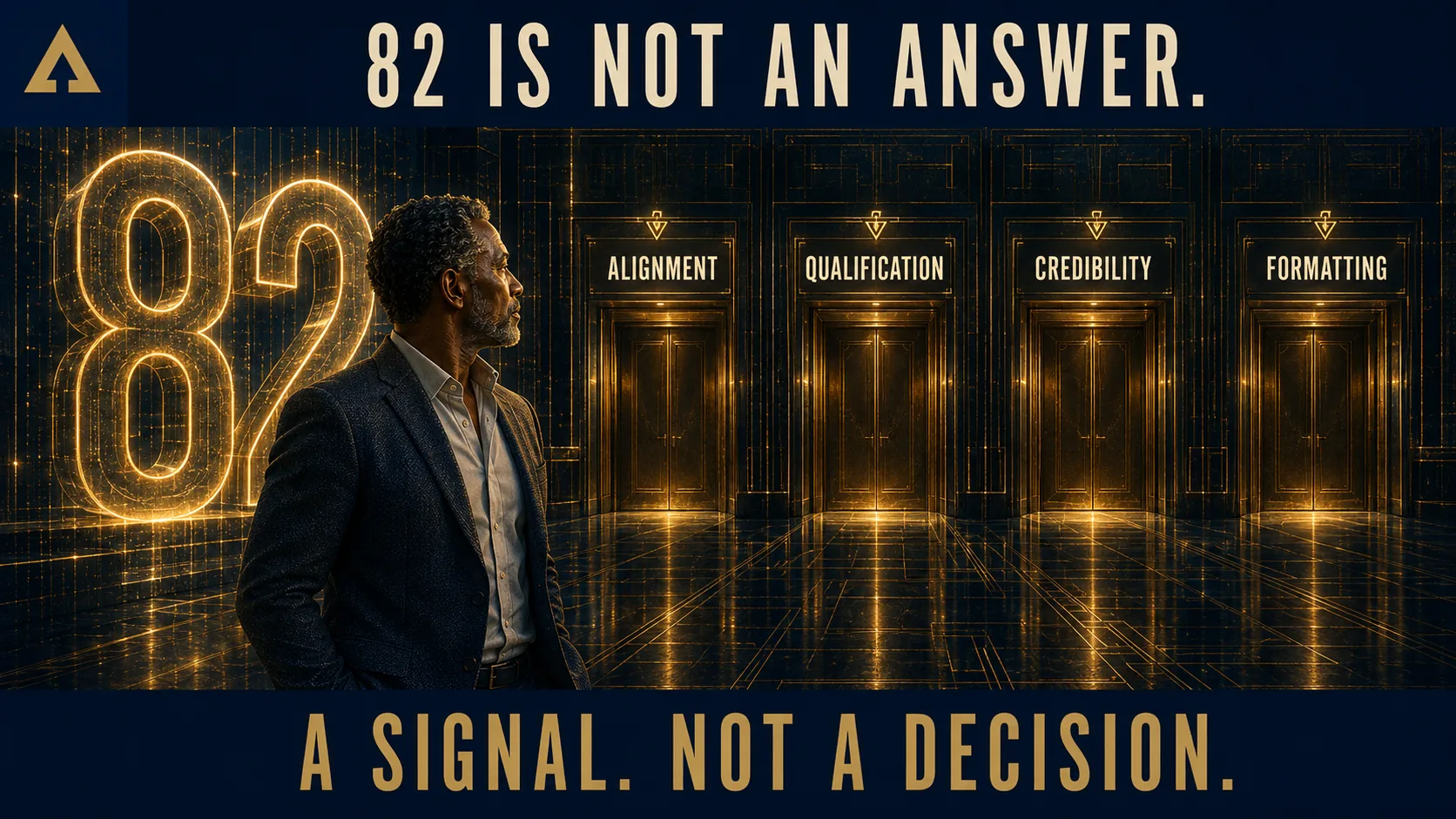
The most dangerous thing about an ATS score may be how certain it looks.
A bright green 82 can feel like permission to apply. A red 64 can make a qualified person rewrite everything. The number creates an emotional reaction before the reader asks a more important question: What produced it?
That is where a score can become useful. It can point toward a problem worth reviewing. It cannot make the hiring decision, verify your private career facts, or tell you what another candidate brings to the role.
The goal is not to ignore the score. The goal is to give it the right job. Use the number to begin a diagnosis, then let evidence guide the change.
What applicant tracking systems actually do
An applicant tracking system, or ATS, helps an employer collect, organize, search, and manage candidate information. The systems are not identical. Employers choose different products, settings, workflows, integrations, and review practices.
For example, Greenhouse Recruiting describes résumé parsing as scanning an uploaded résumé and filling candidate-profile fields with information it detects. Lever documents a similar extraction process for information such as a candidate’s name, organization, and contact details. These are vendor examples, not proof that every ATS handles every file the same way.
Oracle Recruiting documents an intelligent matching feature that compares candidate and requisition information. Oracle’s categories and displays belong to Oracle. They should not be presented as a universal employer score.
A public résumé checker can compare your résumé with a job description and organize possible issues. It cannot reproduce every employer’s private system or tell you whether that employer uses the same scoring logic at all.
The four signals behind a useful score
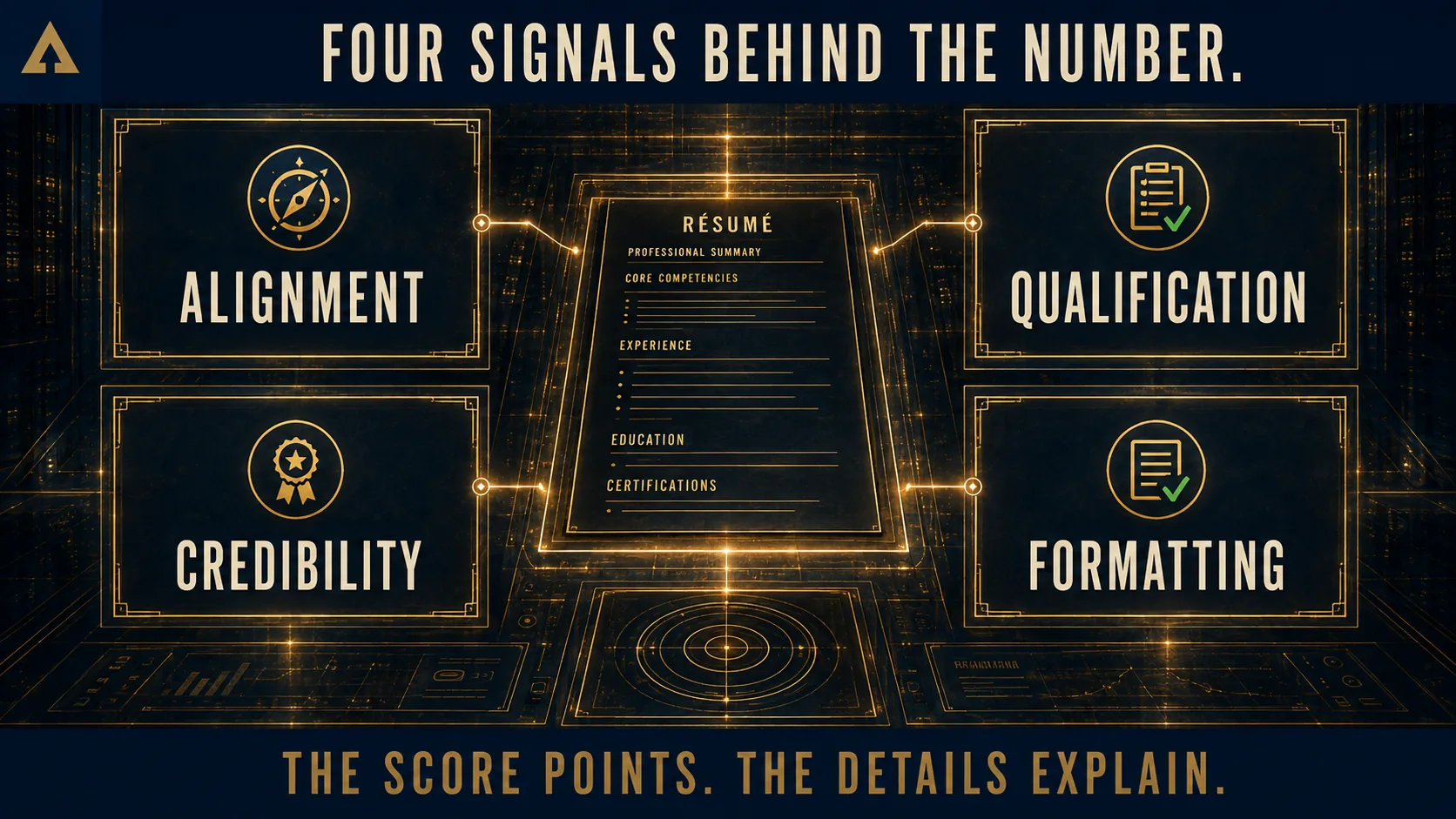
A useful score should lead to an explanation you can inspect. Kaxori organizes that review into four questions.
Alignment
Does the résumé use truthful language that connects your real experience to the target role?
Qualification
Do you actually meet an important requirement? A checker cannot turn familiarity into experience.
Credibility
Do important claims show real work, useful context, defensible numbers, and evidence you can explain?
Formatting
Can software and people follow the document in a clear order?
What the score cannot see
A score can compare information available to the tool. The hiring process contains information the checker does not have.
- Whether a recruiter will open, prefer, or believe the résumé.
- Whether the employer uses the same logic or any résumé score at all.
- Whether a private career claim is true.
- Whether another candidate is more qualified.
- Whether the application will lead to an interview or offer.
- Whether bias, accessibility barriers, or a flawed process affects the decision.
The U.S. Equal Employment Opportunity Commission warns that software and artificial intelligence used in hiring can create disability-discrimination risks. A résumé score cannot show the whole fairness, accessibility, or human context of an employer’s process.
These limits define the job a score can honestly perform. The score points toward a question. Your evidence decides what you should change.

Use Pause, Diagnose, Repair, Recheck
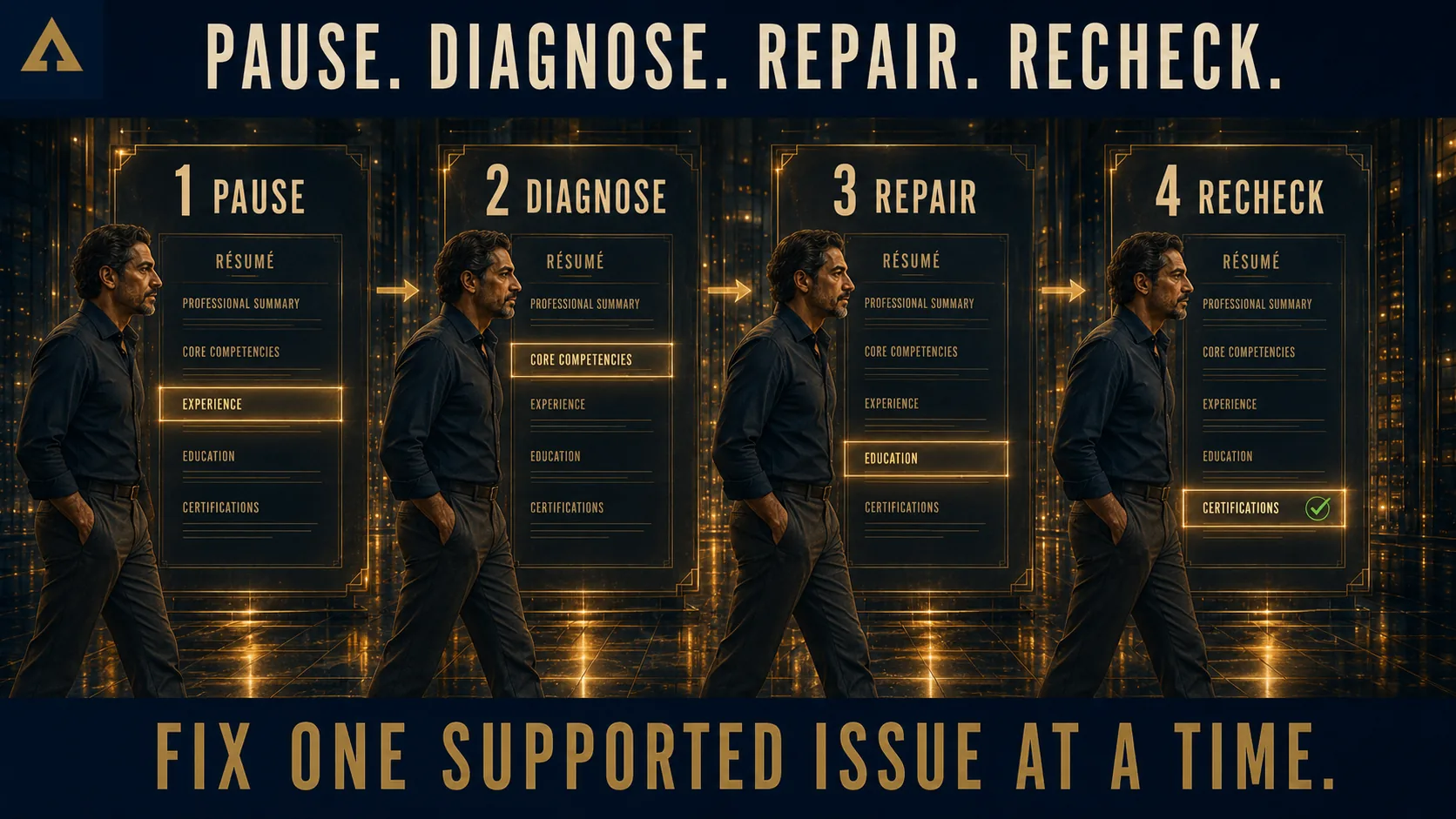
The score becomes useful when it leads to a disciplined next step. Do not rebuild the whole résumé because one number made you nervous.
Pause before reacting
Confirm which résumé and job description were compared. Read the details before celebrating or panicking.
Diagnose the source
Find the exact sentence, missing proof, real gap, or document feature behind the result.
Repair one supported issue
Make the smallest truthful change that improves clarity.
Recheck the explanation
Ask whether the explanation improved, then read the résumé as a person would.
Example: one phrase, one supported repair
A job description lists customer segmentation. The résumé uses audience planning but never shows how the groups were created.
The wrong repair is to repeat customer segmentation in the summary, skills section, and several bullets. Repetition may move a score without proving experience.
The important change is the clearer connection between the employer’s language and work the candidate can explain. Use only language and results supported by your actual experience.
For a deeper language review, use Your Résumé Needs the Right Keywords, Not More Keywords.
Why you should stop chasing 100
A person who follows only the number may add too many keywords, flatten the natural voice, or overstate a skill. Every bullet starts to sound alike. The résumé becomes easier for a checker to count and harder for a person to trust.
Stop when the résumé tells the right story. Important claims should have support. Relevant experience should be easy to find. The document should still sound like you.
A higher score is not worth a weaker person on the page.

A five-minute review before you apply
- Confirm the correct résumé and job description.
- Read the explanation behind the score.
- Identify the strongest signal: alignment, qualification, credibility, or formatting.
- Choose one issue you can support with evidence.
- Make the smallest truthful repair.
- Recheck the explanation, not just the number.
- Read the résumé aloud before you apply.
How Kaxori uses ATS signals
Kaxori is designed to compare one résumé with one job description and explain where alignment, qualification, credibility, or formatting may need attention. The useful output is not a magic number. It is a clearer next question.
Kaxori cannot reproduce a specific employer’s private rules. It cannot verify facts the user did not provide. It cannot guarantee screening, ranking, an interview, or a hiring result.
Artificial intelligence can help organize, compare, translate, and revise information. You remain responsible for confirming every title, date, tool, number, result, qualification, and level of ownership.
For a product-focused walkthrough of the score display and supporting review signals, read how to use the Kaxori ATS Resume Checker.
Turn the score into a useful next step
Pause. Diagnose the source. Repair one supported issue. Recheck the explanation. The goal is not 100. The goal is a clearer, more credible application that still belongs to you.
Compare my résuméFrequently asked questions
What is a good ATS score?
There is no universal score that guarantees an outcome. Read the number within the tool that produced it and focus on the explanation behind the score.
Does an employer see the same ATS score?
Not necessarily. Employers use different systems, settings, workflows, and review practices.
Can a high ATS score guarantee an interview?
No. A score cannot control recruiter judgment, competition, hiring priorities, interviews, or offers.
Should I keep editing until I reach 100?
No. Stop when a change weakens your natural voice, adds a claim you cannot support, or makes the résumé harder to read.
Why did my score change for another job?
Alignment depends on the target. Different roles have different priorities, language, tools, and needs.
Can AI verify my experience?
No. You must verify titles, dates, tools, numbers, results, qualifications, and ownership.