The line is simple: clearer is fine. Bigger isn't.
Tailoring becomes exaggeration when the resume adds ownership, results, qualifications, tools, or experience you can't support. Strong writing can make real work easier to recognize. It shouldn't make your career look bigger or more impressive than the facts support.
She had the experience. The job just called it something different.
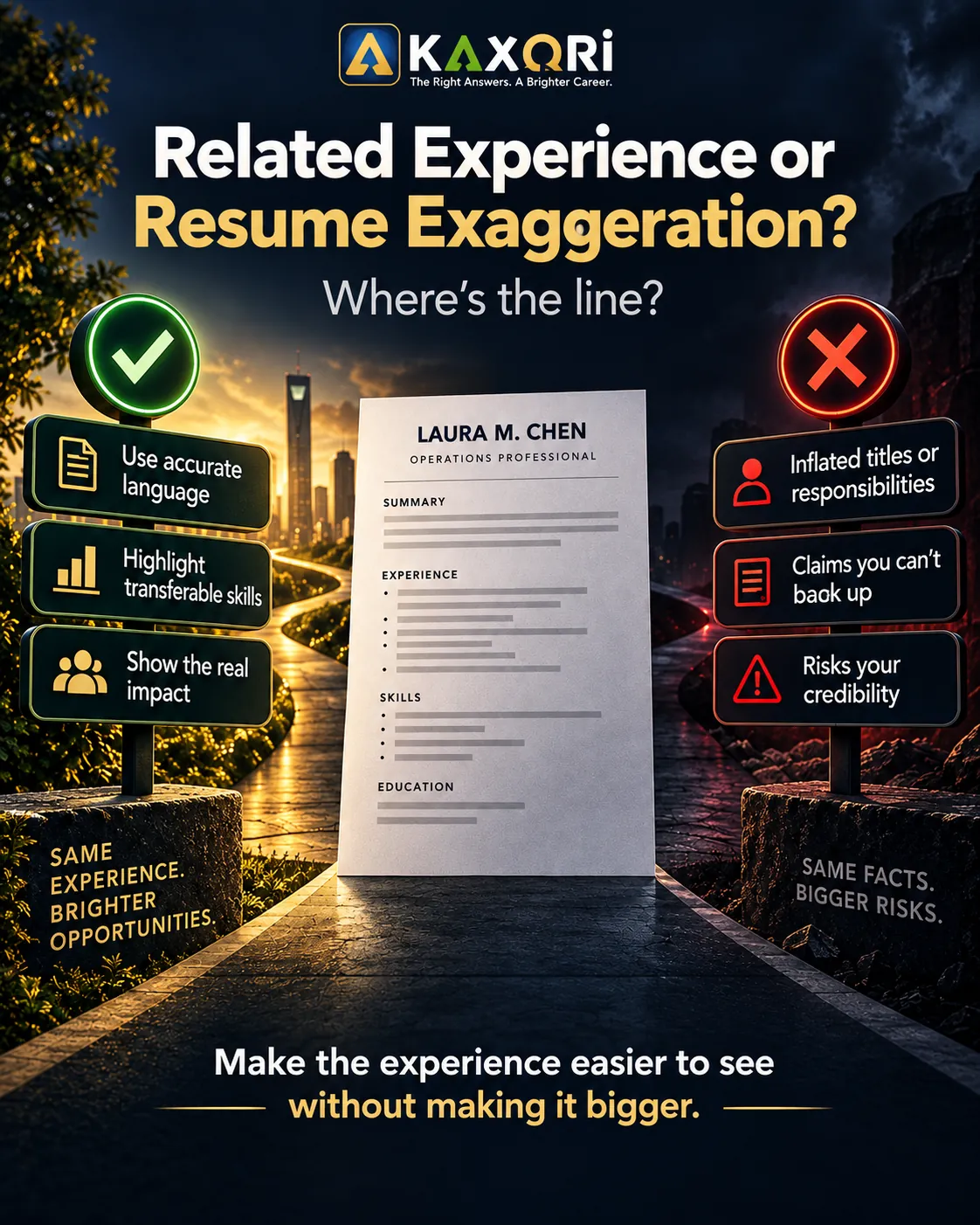
Laura had spent 16 years in operations. She had managed vendors, improved workflows, worked with finance on budgets, helped HR with workforce planning, and led process changes across several locations. She had also been part of two major system implementations, even though IT owned the technical side.
Then she found a VP of Operations role she really wanted. The posting asked for enterprise systems leadership, P&L ownership, workforce planning, vendor strategy, and process improvement. Laura had done a lot of that work, but not always with the same titles, not always in the same industry, and not always with full ownership.
Her first resume undersold her. It said things like “supported ERP implementation” and “worked with finance on annual planning,” which were technically true but didn't show the scope of what she actually did. Her second version went too far in the other direction. Suddenly she was “leading enterprise technology transformation” and “owning a $25 million P&L.” That sounded better, but it wasn't quite true either.
Laura didn't need a weaker resume, and she didn't need a bigger story. She needed the truth translated clearly enough that the employer could see the fit.
Not sure if it's a translation problem or a real gap?
Put the job and your resume side by side. Kaxori can show what already matches, what needs clearer language, and what still needs proof.
Why related experience gets complicated fast
Most careers are messy. Job titles change, companies use their own language, and the same responsibility can sound completely different from one employer to the next. Operations may call something continuous improvement, finance may call it cost control, HR may call it workforce optimization, and engineering may call it process redesign.
The work can be very similar even when the words are different, but that doesn't mean every similar phrase is interchangeable. If you worked near a tool, that's not the same as using it. If you supported a project, that's not the same as leading it. And if your team influenced revenue, that's not always the same as personally generating the money.
Good resume writing should make those differences easier to understand, not blur them.
Use TSB: Translate, Support, Bound
I like a simple three-part test for this. I call it TSB: Translate, Support, Bound. It works whether you're in operations, finance, engineering, HR, management, or marketing because the problem is the same. You want to get closer to the employer's language without stepping outside the facts.
Match, Translate, Gap tells you which employer terms apply to you. TSB tells you how far you can take the wording. The first framework finds the fit. The second keeps the language inside the facts.
T: Translate
Use the employer's language when it accurately describes work you've already done. If the job says “workforce planning” and you regularly helped determine staffing levels, shift coverage, labor needs, and hiring priorities, the new wording may simply make the same work easier to recognize.
S: Support
Connect the statement to evidence you can explain. That evidence might be in an older resume, a performance review, a project summary, a writing sample, an award, an email, a presentation, or your own clear memory of the work. The point isn't to build a courtroom case. It's to know where the claim came from.
B: Bound
Keep the edge of the claim inside what you actually owned, influenced, supported, or delivered. A stronger verb is only better when it's true.
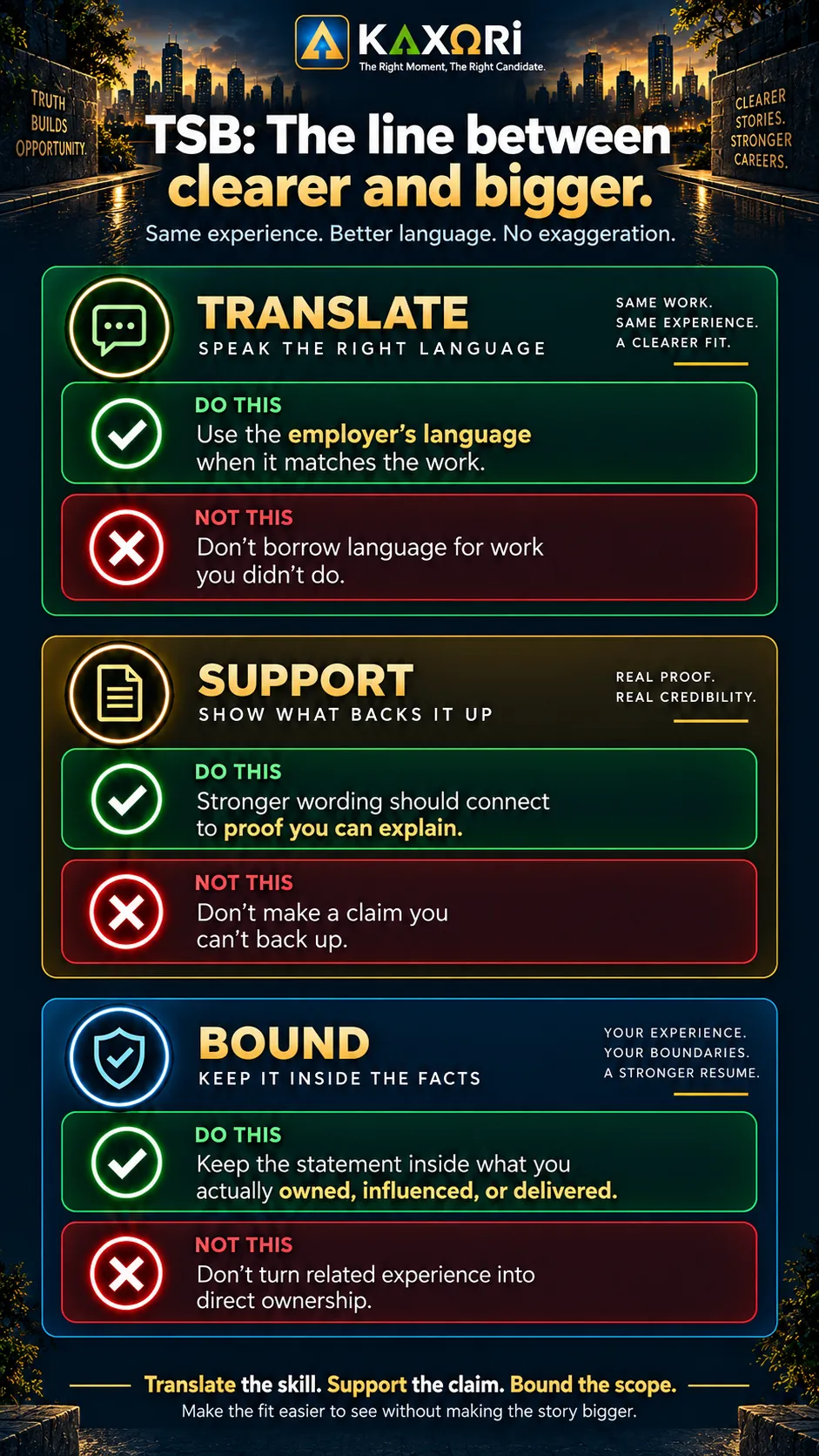
Make the wording stronger without making the claim bigger.
Kaxori can help rewrite supported experience using language the employer is more likely to recognize while keeping the facts intact.
Five resume claims that deserve a boundary check

1. “Led”
“Led” is one of the easiest verbs to overuse. Maybe you coordinated the work, maybe you were the subject-matter expert, or maybe you owned one part of the project while somebody else made the final decisions. Those can all be valuable contributions, but they aren't always leadership in the same sense.
Use the verb that fits the responsibility. Led, managed, owned, coordinated, supported, advised, built, launched, and contributed can all be strong when they're accurate.
2. Revenue and savings
Money makes a resume stronger because it gives the reader scale, but it can also create trouble when your relationship to the result isn't clear. There's a difference between generating $20 million, influencing $20 million, supporting a business that produced $20 million, and working on one part of a larger outcome.
You don't have to throw away the money. You just have to describe your relationship to it correctly.
3. Team size and budget
The same thing happens with people and money. Working across a 40-person organization isn't the same as managing 40 people, and supporting a $10 million operating plan isn't the same as owning a $10 million budget. Both can still show meaningful scope when the wording makes your role clear.
4. Tools and systems
Exposure isn't the same as proficiency. An engineering manager who reviews output from a platform may understand the business use without being the person who configured it. An HR leader may sponsor an HRIS rollout without being the systems administrator. An operations executive may help choose an ERP and redesign the process around it without owning the technical implementation.
All of those experiences matter. They just need the right wording because an interviewer can go deeper very quickly.
5. Industry experience
Transferable skills can cross industries, but industry experience can't always be translated the same way. A finance leader who managed forecasting, working capital, and margin improvement in manufacturing may have skills that transfer to healthcare, technology, or professional services. That doesn't mean the industries are interchangeable.
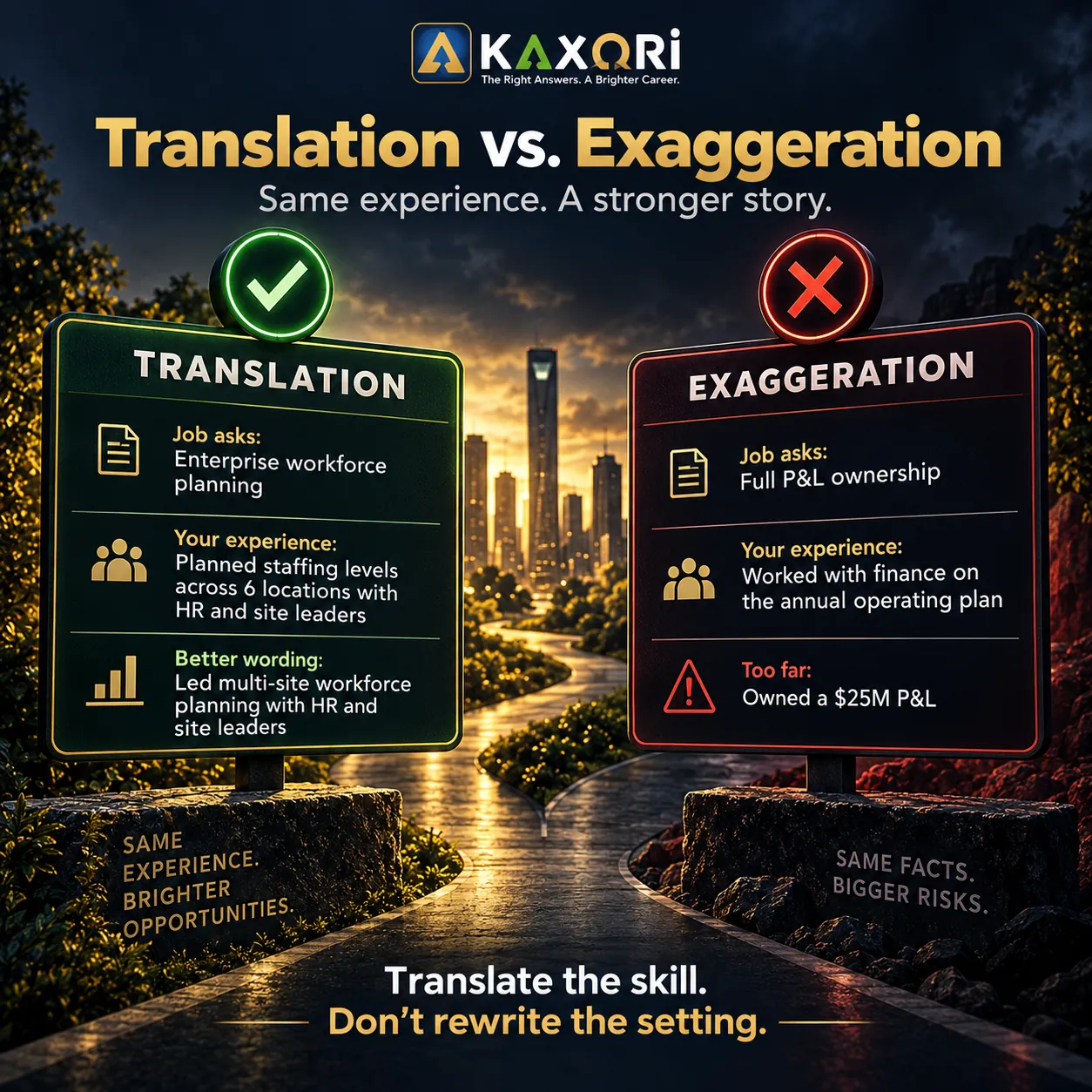
Translate the skill. Don't rewrite the setting.
Related experience isn't the same as direct experience
You may have done work that's highly relevant to the job without doing it in the same industry, at the same scale, or with the same title. That's related experience. Direct experience means you've done the same or very similar work in a closely matching setting.
Both can be useful, but they shouldn't be presented as if they're identical. Sometimes the bridge is strong enough that the employer won't care, and sometimes it isn't. Your resume should make the bridge visible and let the employer decide.
What truthful translation looks like
Imagine an operations job asks for “enterprise workforce planning across multiple sites.” Your current resume says, “Worked with HR and site leaders to plan staffing levels, shift coverage, and hiring needs across six locations.”
Those two statements may describe the same underlying work. A truthful rewrite could be, “Planned staffing levels, shift coverage, and hiring needs across six locations in partnership with HR and site leaders.” The language gets closer to the employer's wording without claiming ownership you didn't have.
Now imagine the same role asks for “full P&L ownership.” You worked closely with finance, reviewed monthly results, recommended cost actions, and helped build the operating plan, but the business president owned the P&L. Calling yourself the P&L owner would cross the line. Your experience is related and useful, but the ownership level is different.
Different functions hit the same problem in different ways
An engineering candidate may have designed part of a system but not owned the architecture. An HR leader may have partnered on compensation strategy but not had final authority over the program. A finance manager may have built the forecast without owning the business unit. A general manager may have run the day-to-day operation while someone else controlled capital decisions.
Every function has work that sits somewhere between “I touched it” and “I owned it.” The resume has to show the real level of responsibility without flattening those differences.
Where AI makes this easier, and where it can go wrong
AI can be very useful here. It can compare a job description with your resume, find similar ideas, surface older evidence, suggest clearer wording, and show where the language is different. But it can also write a sentence that sounds completely reasonable and still goes too far.
AI only knows what you give it. When the evidence is missing, it may fill the gap with a smart guess. A smart guess is still a guess, and the final resume belongs to you.
Your current resume is only one version of your career
Most people don't keep every accomplishment in one place. A strong metric may be sitting in an old resume. A better description of a project may be buried in a performance review. An annual review may explain how much responsibility you actually carried. A writing sample may show how you communicate. A recommendation may remind you of work you stopped talking about years ago.
That's why one resume by itself can be limiting. It only shows what made the cut the last time you edited it.
SignalIQ brings that evidence together.

Kaxori's Signal Vault gives SignalIQ more of your real career history to work with. Depending on your plan, that can include your primary resume, additional resumes and CVs, achievement documents, writing samples, and your Voice Profile.
That broader evidence gives SignalIQ a better chance of finding experience you really have but may have forgotten, shortened, or left out of your current resume. Instead of trying to make one resume do all the work, Kaxori can compare the job with a much fuller picture of your career.
Kaxori doesn't add unsupported experience because a keyword is missing. SignalIQ can use the supported career material you've uploaded to look for relevant proof. If that proof is there, Kaxori can bring it forward. If it isn't, the gap stays a gap.
That's especially useful for experienced professionals because your best proof may be spread across years of work. An old resume may contain a metric that disappeared from the current version. A review may explain a project more clearly than your resume does. A writing sample may show your real voice better than any generated sentence.
Give SignalIQ the full picture of your career.
Your strongest proof may be sitting in an older resume, review, project summary, writing sample, or achievement document. Premium gives Kaxori more of that evidence to work with.
See Premium Options SignalIQ · Voice Profile · Writing samples · Deeper optimizationBefore you use the sentence, ask four questions
Before a new bullet goes into your resume, ask yourself four things: Did I actually do this? Does the verb match my real level of ownership? Can I explain the money, tool, scope, or result if someone asks? Would a former manager recognize this version of the story?
For a faster version of this check, try the Five-Second Resume Credibility Test.
If any of those questions make you hesitate, narrow the language. A slightly less impressive sentence that you can defend is stronger than a polished sentence that falls apart in an interview.
Your resume doesn't need to match every line of the job
A lot of job seekers treat the job description like a checklist that has to be completed before they apply, and that creates pressure to close every gap. You don't have to close every gap. Some things match, some can be translated, and some are simply missing.
If you're deciding whether the gap is still worth applying through, use Apply, Stretch, or Skip as the next check.
A real gap isn't a failure. It's information that helps you decide whether the rest of your background is strong enough to apply anyway. The goal is to understand the gap, not hide it.
Before you submit, run one final TSB check
Read the resume one more time and look for claims that sound bigger than your memory of the work. Check the verbs. Check the money. Check the tools. Check the team size. Check the industry language. Then ask whether each important statement is translated clearly, supported by something real, and bounded by your actual role.
If the answer is yes, you're not gaming the system. You're making it easier for the system and the person behind it to understand what you've actually done.
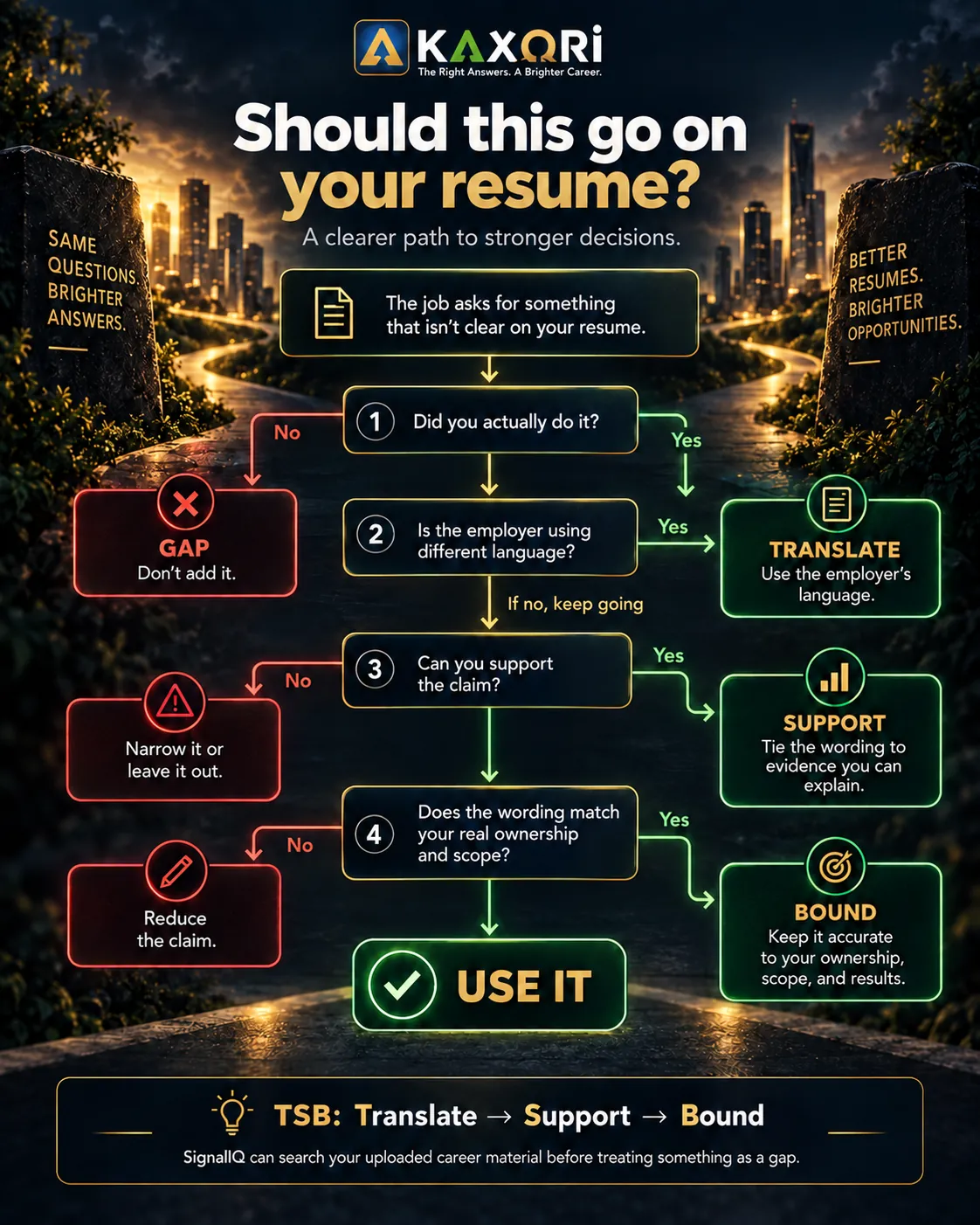
Run the TSB check on a real job.
Compare one job with your real experience, strengthen the wording you can support, and leave the real gaps honest.
Frequently asked questions
Is it okay to change resume wording for each job?
Yes. Change the emphasis and language when the new wording stays true. Don't change dates, titles, qualifications, ownership, tools, or results to create a fit that isn't there.
Can I use the exact wording from a job description?
Yes, when the wording accurately describes work you've done. Important terms should connect to evidence instead of showing up only because the employer used them.
Is transferable experience the same as direct experience?
No. Transferable experience can create a strong bridge, but the industry, tool, scale, or level of ownership may still be different. Keep that difference visible.
Can AI exaggerate a resume by accident?
Yes. AI can produce confident language that goes beyond the facts you supplied. Review every title, amount, tool, responsibility, result, and level of ownership before submitting anything.
Is it OK to embellish a resume?
It is OK to make true experience clearer. It is not OK to add ownership, results, tools, qualifications, or direct experience you did not have. If the stronger wording changes the facts, it has crossed the line.
What is the difference between embellishing and lying on a resume?
Both can misrepresent your background. The practical boundary is whether the statement remains accurate and defensible. A clearer description of real work is tailoring. A claim that changes what you owned, did, or achieved is not.